by Ann Yurcek
Caregivers of individuals with Fetal Alcohol Spectrum Disorders (FASD) often face significant challenges and fears related to their caregiving role. These fears stem from various factors associated with the complex nature of FASD:
- Caregivers frequently worry about the behavioral issues and developmental delays exhibited by children with FASD.
- The unpredictable nature of these behaviors can cause stress and anxiety for caregivers as they struggle to manage and understand their child’s actions.
- The unpredictability of triggers, emotional dysregulation, and more can provoke real fears.
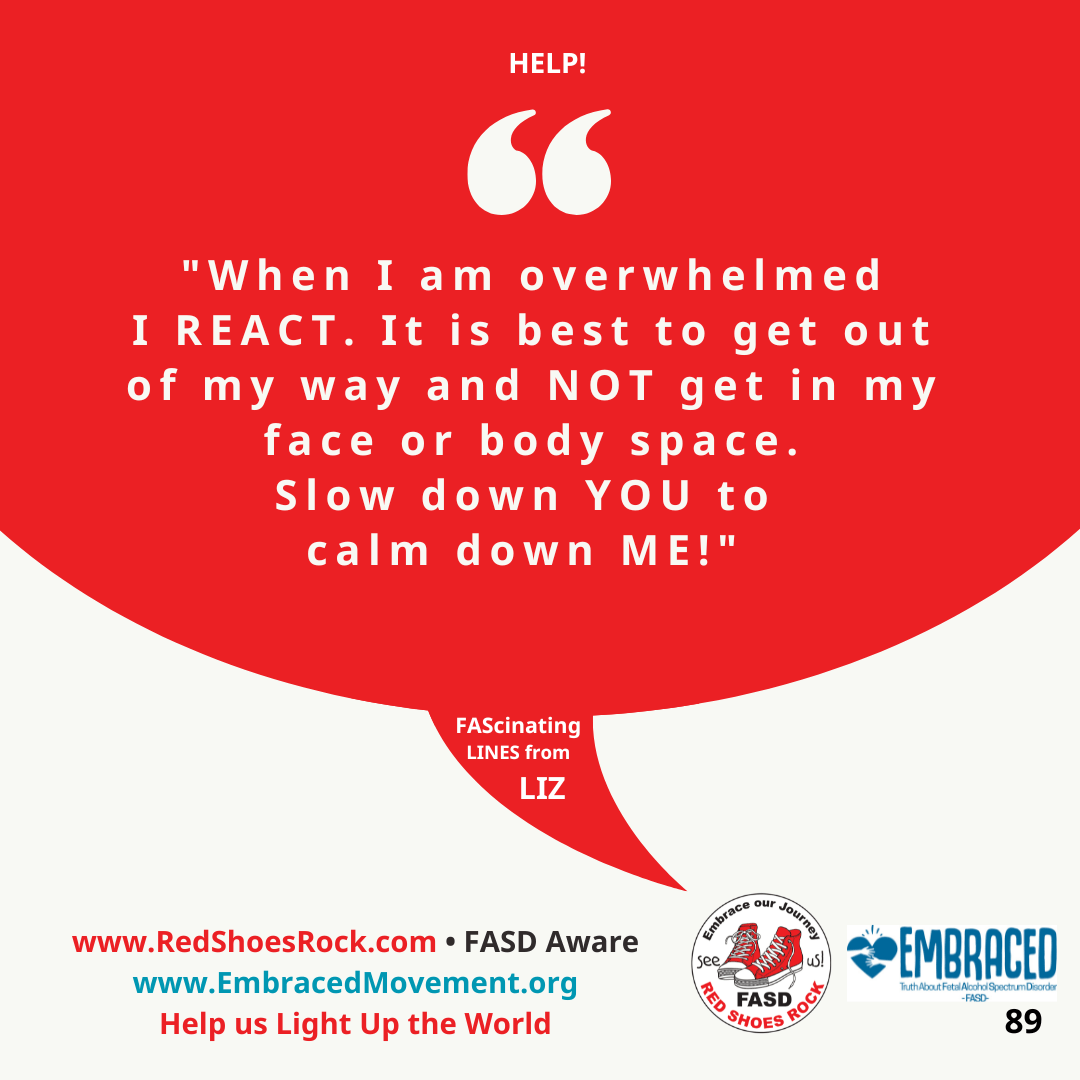
- Meltdowns from stacking, overwhelm, confusion, and hidden triggers can be expected.
- Caregivers of individuals with FASD are prone to the development of Post Traumatic Stress Disorders because of living in the FEAR and unpredictability of life caring for those with FASD.
The risk of harm to caregivers from children with FASD is heightened due to the challenging behaviors often exhibited by these children. Many children with FASD display externalizing behavior problems, such as aggression and impulsivity, which can lead to situations where caregivers might be at risk of physical harm.
For some parents of kids with FASDs, the trusted parent will be the target of pent-up frustrations because they are the safe person. During those moments of blowing up, the parent can be put at risk of harm due to heightened dysregulation. Understanding that your energy will fuel their energy is vital to de-escalate and prevent physical aggression, property destruction, and injuries.
Additionally, the fear is compounded by the understanding that the person with FASD is not in control of their thoughts and there are often few memories of anything that is happening. People with FASD frequently struggle with insight and rely on visual memory; they cannot see or understand their role in the events.
Ann Yurcek is an award winning author, speaker, and mother of twelve children, six of them with FASD.
 Red Shoes Rock