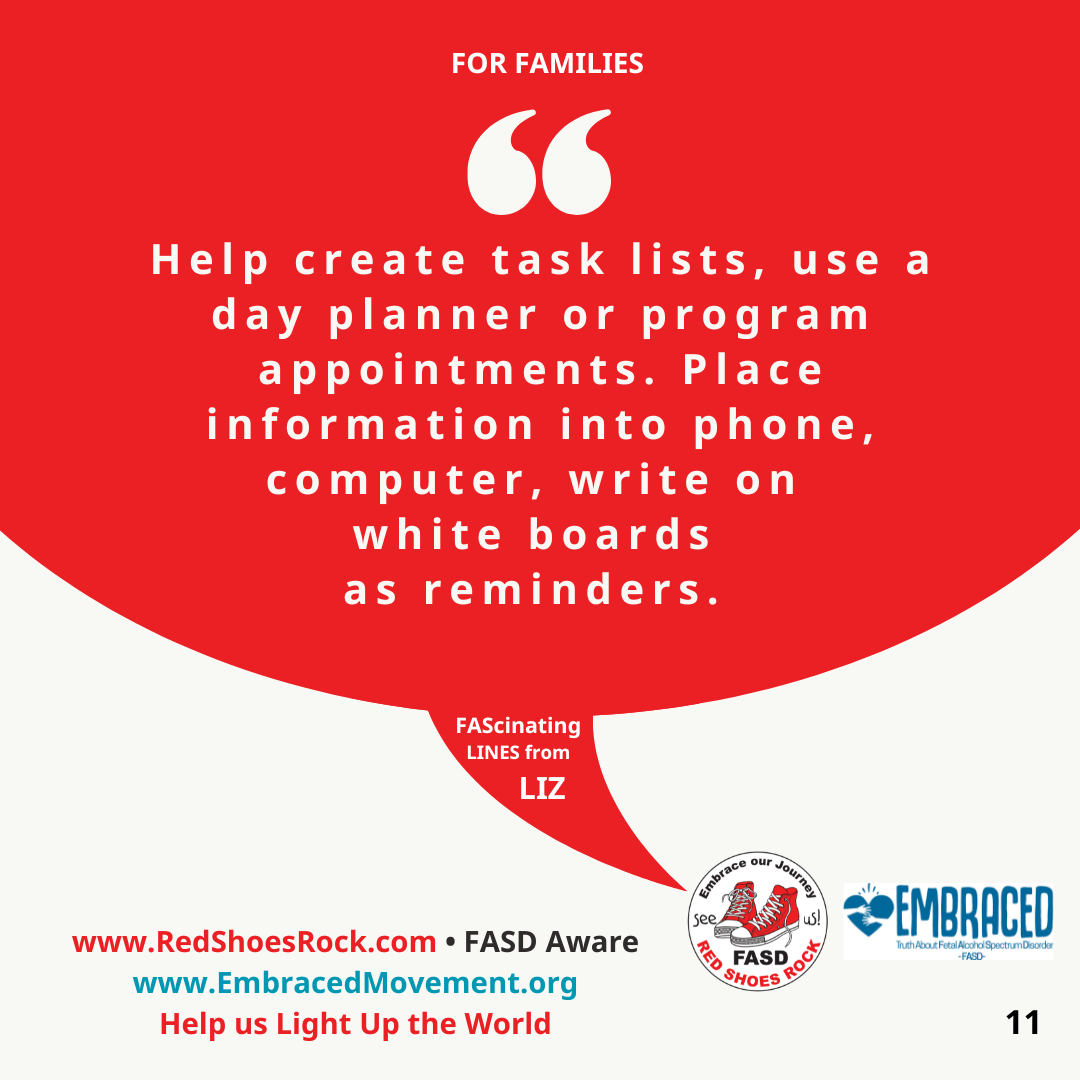
Managing tasks and staying organized can be challenging for individuals with Fetal Alcohol Spectrum Disorders (FASD) due to difficulties with memory, attention, and executive function. However, using the right tools and strategies can make a significant difference. Here are ten practical ideas to help manage tasks and stay on top of daily responsibilities.
- Create Task Lists: Write down all the tasks you need to complete in a list format. Breaking tasks into smaller, manageable steps can make them feel less overwhelming. Check off tasks as you complete them to give a sense of accomplishment.
- Use a Day Planner: A day planner can help you organize your time effectively. Write down appointments, deadlines, and daily to-dos. Reviewing your planner each morning can help you stay on track.
- Set Up Reminders: Use your phone or computer to set reminders for important tasks and appointments. Alarms and notifications can prompt you to start or complete tasks on time.
- Write on White Boards: Place a whiteboard in a common area of your home where you can write down tasks, appointments, and reminders. The visual display helps keep important information front and center.
- Use Calendar Apps: Digital calendars can be synced across devices, ensuring you have access to your schedule wherever you are. Color-code different types of tasks for easy reference.
- Establish Routines: Consistent routines can help reduce the need to remember new tasks daily. Establish regular times for meals, exercise, and other recurring activities to create structure in your day.
- Organize Your Space: Keep your living and working areas tidy and organized. Designated spaces for commonly used items can reduce time spent searching for things and minimize distractions.
- Prioritize Tasks: Determine which tasks are most important and tackle those first. Prioritizing helps ensure that essential tasks are completed even if you don’t get through your entire list.
- Use Visual Aids: Visual aids like charts, diagrams, and color-coded lists can help make information more understandable and memorable. Visual schedules can also assist in managing time effectively.
- Break Tasks into Chunks: Large tasks can be daunting. Break them down into smaller, more manageable chunks. Focus on completing one chunk at a time to make progress without feeling overwhelmed.
By incorporating these tools and strategies, individuals with FASD can better manage their tasks and stay organized. Whether it’s through digital reminders, physical lists, or structured routines, finding what works best for you can lead to greater independence and success in daily life. Remember, the key is to use a combination of strategies that cater to your unique needs and preferences.
 Red Shoes Rock
I see this need so much in my son, 9, and other individuals with FASD. A good list of tips and tools!
LikeLike