
This process of letting go is never easy, but it’s essential for finding peace and moving forward. Here are some strategies that have helped me, and I hope they can help you too.
Author Archives: jodeekulp
Finding Comfort: Navigating Life with FASD
Your journey with FASD is unique, and finding comfort along the way is not just possible, but within your reach. Embrace the support around you, maintain a steady routine, and prioritize self-care. Every small step forward is a victory worth celebrating.
Nurturing Growth: Rearing a Person with FASD and Planting a Garden in Rocky Soil
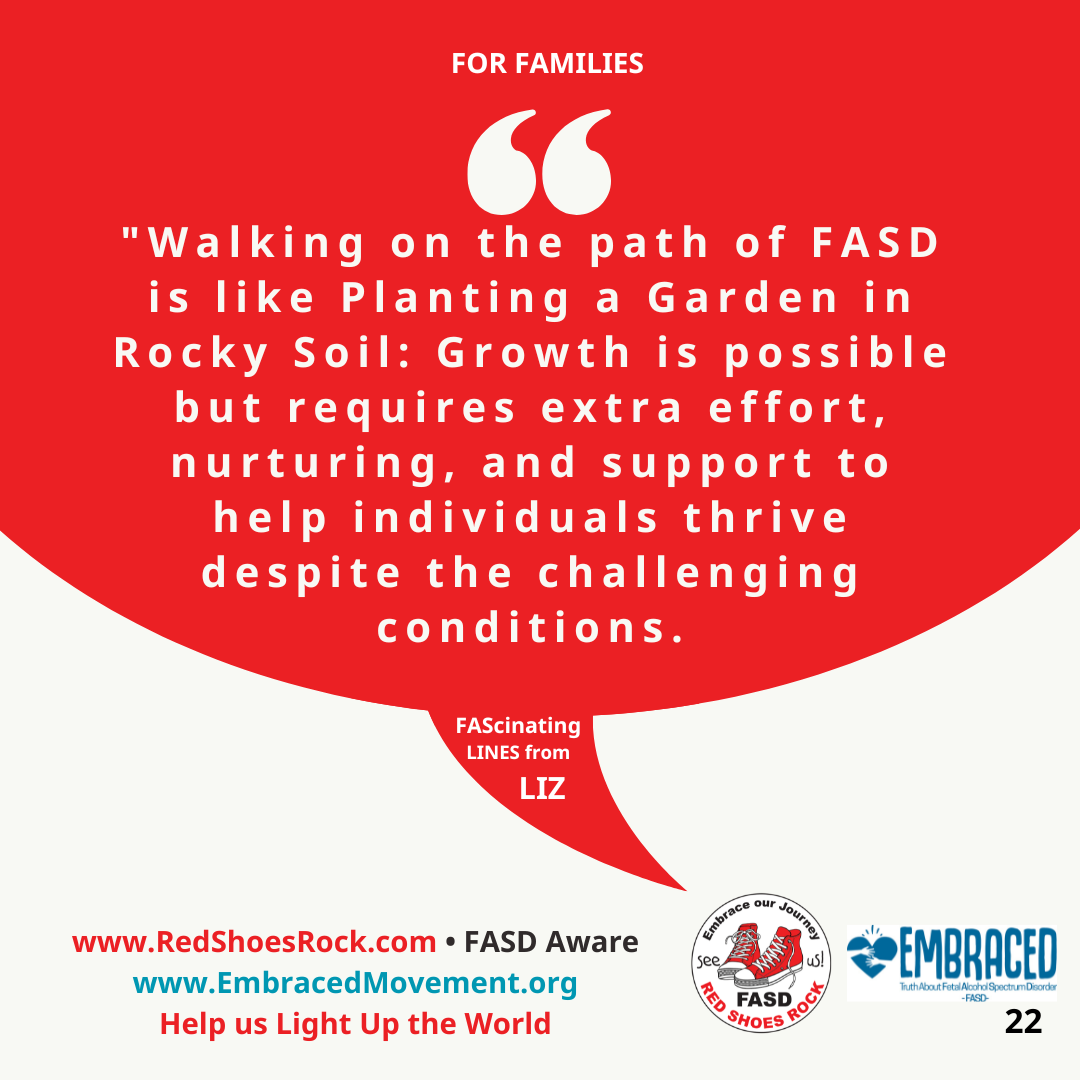
Understanding FASD requires a thorough assessment of the child’s unique needs and strengths. This might involve seeking expert diagnoses, learning about the disorder, and creating a supportive home environment tailored to those needs.
Finding Joy in Small Moments with FASD

Finding joy in small moments is possible and within your reach. By focusing on the positive and celebrating every achievement, you can create a life filled with happiness and fulfillment.
Why Drawing Can Help Persons with FASD

Drawing plays to the visual strengths of kids with FASD while reducing demands in areas they struggle with like language. The hands-on, personalized, multi-sensory nature of drawing supports their overall learning and skill development.
E=EDUCATION – Expanding the Mind

I get to grow again with my daughter who is now age 37, and experiencing life from a little over three months of healing from three brain procedures. Once again we begin to utilize our knowledge of developmental fluidity… this is our 4th time. Initially, as an elementary student. Then recovery from complex issues beginningContinueContinue reading “E=EDUCATION – Expanding the Mind”
Breaking Down Goals into Tiny Steps for Individuals with FASD

By breaking down goals into smaller, manageable steps and celebrating each milestone, caregivers can help individuals stay motivated and experience a sense of achievement.
Why breaking down goals into tiny manageable steps may not work!
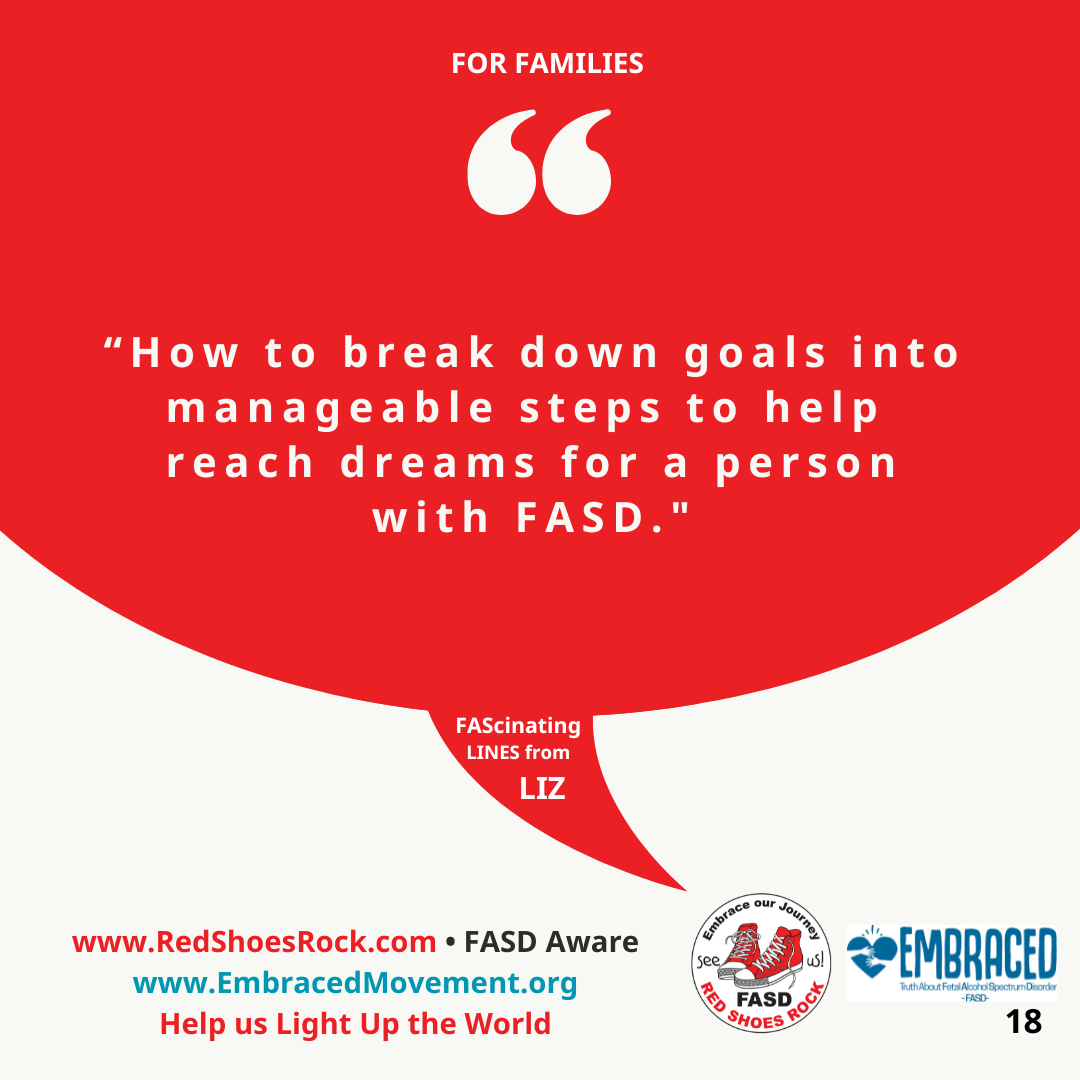
By recognizing the unique challenges faced by individuals with FASD, caregivers can adapt strategies to better suit their needs, providing more immediate, clear, and supportive reinforcement to help them succeed.
Using Positive Reinforcement to Encourage Desired Behaviors

Positive reinforcement is a powerful method for encouraging desired behaviors and building self-esteem. By using praise, rewards, and incentives consistently and thoughtfully, caregivers can create a supportive environment that fosters growth and positive change.
Understanding Neurodiversity: Communicating with Respect and Clarity
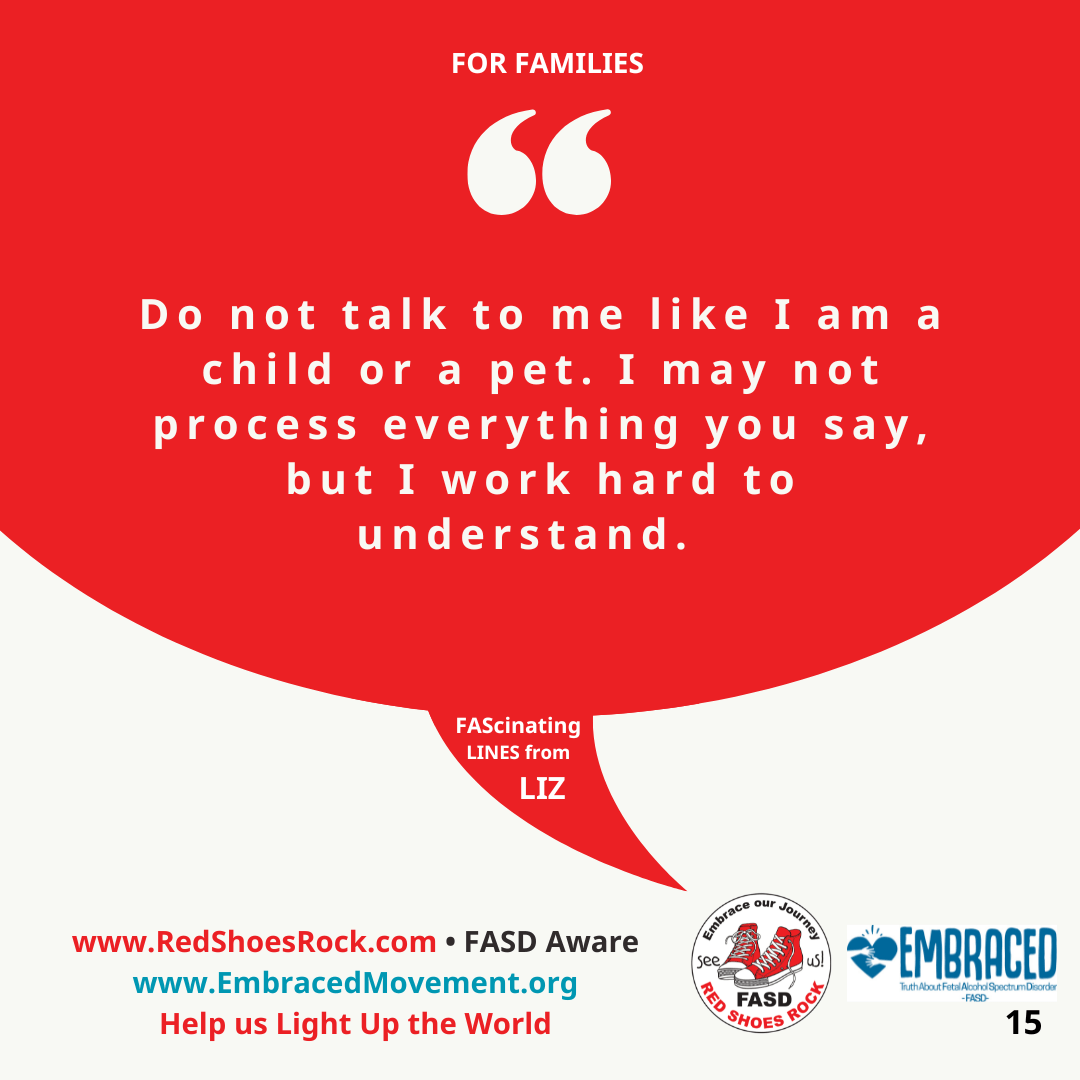
It’s important to remember that while some individuals may process information differently, they deserve the same respect and consideration as anyone else.
 Red Shoes Rock