Support Your Loved One with FASD: A Family Guide
Living with and loving someone with Fetal Alcohol Spectrum Disorder (FASD) can be a unique journey filled with both challenges and rewards. As a family, your understanding and support play a crucial role in helping your loved one thrive. Here’s how you can create a supportive environment and protect your family from misunderstandings.
Understanding FASD
FASD is often called an “invisible disability” because it’s not always apparent from a person’s appearance. It affects brain development, impacting behavior, learning, and social skills. Remember, FASD is not caused by poor parenting or lack of effort – it’s a medical condition that requires understanding and support.
Creating a Supportive Home Environment
- Establish routines: Consistency helps individuals with FASD feel secure and reduces challenging behaviors.
- Use visual aids: Create visual schedules or use social stories to help prepare for new situations.
- Designate a quiet space: Have a “chill zone” where your loved one can retreat if overwhelmed.
Navigating Family Gatherings
Family events can be challenging due to sensory overload and social complexities. Try these strategies:
- Prepare in advance: Use “Event Roadmaps” to outline schedules and expectations.
- Implement a buddy system: Partner your loved one with an understanding family member.
- Use a discreet signal: Develop a code word or special accessory to signal when a break is needed.
- Consider shorter visits: Introduce “FASD-Friendly Time Slots” for more manageable interactions.
Educating Extended Family and Friends
Misunderstandings often stem from lack of knowledge. Here’s how to spread awareness:
- Host an “FASD Movie Night” featuring informative documentaries.
- Create “FASD Awareness Cards” with brief explanations to hand out.
- Develop a family-specific “FASD Trivia Game” to share facts in an engaging way.
- Designate rotating “FASD Ambassadors” among family members to share advocacy responsibilities.
Protecting Against Misinterpretation
- Develop a “quick explanation” of FASD for unexpected situations.
- Use “person-first” language (e.g., “person with FASD” rather than “FASD person”).
- Focus on strengths: Help others recognize and appreciate your loved one’s positive qualities.
- Be prepared to advocate: Speak up to explain FASD-related behaviors when misunderstandings occur.
Self-Care for Caregivers
Supporting someone with FASD can be demanding. Don’t forget to take care of yourself:
- Join support groups to connect with other families affected by FASD.
- Stay informed about current research and best practices.
- Seek professional support when needed.
- Set boundaries with unsupportive individuals to protect your family’s well-being.
Your efforts to create an understanding and supportive environment make a world of difference. Every step towards better understanding and accommodation is a victory. Your love, patience, and advocacy are powerful tools in helping your loved one with FASD navigate the world. By working together as a family, educating others, and implementing supportive strategies, you can create a positive environment where your loved one with FASD can thrive. Your journey may have unique challenges, but it’s also filled with opportunities for growth, love, and connection.understanding, respect, and quality care they deserve in medical settings.
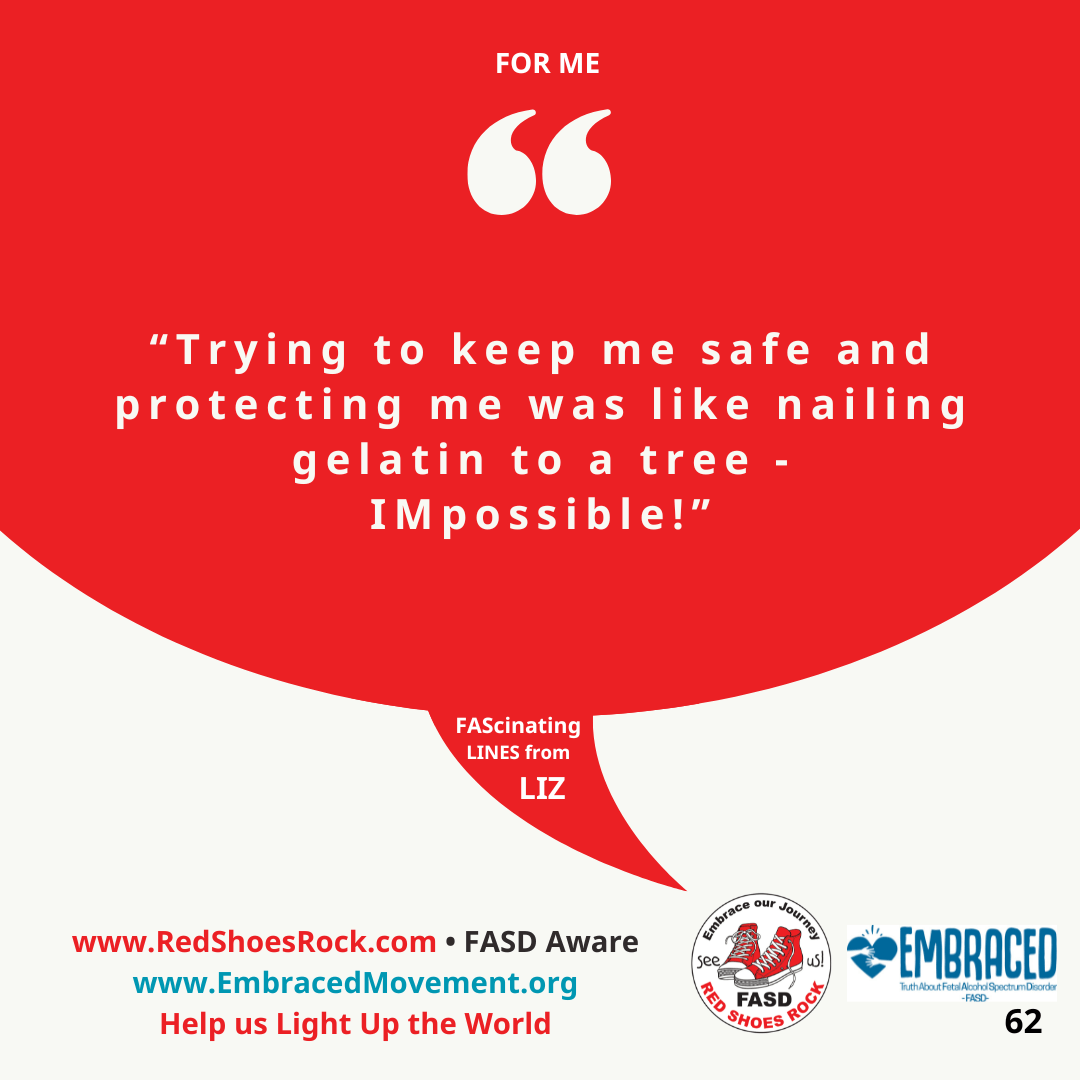
TODAY’S NOTE: “Yes, I was a wild child full of spunk and surprises… My parents had their work cut out for them until I was about 23 years old. – In Solidarity, Liz“
 Red Shoes Rock