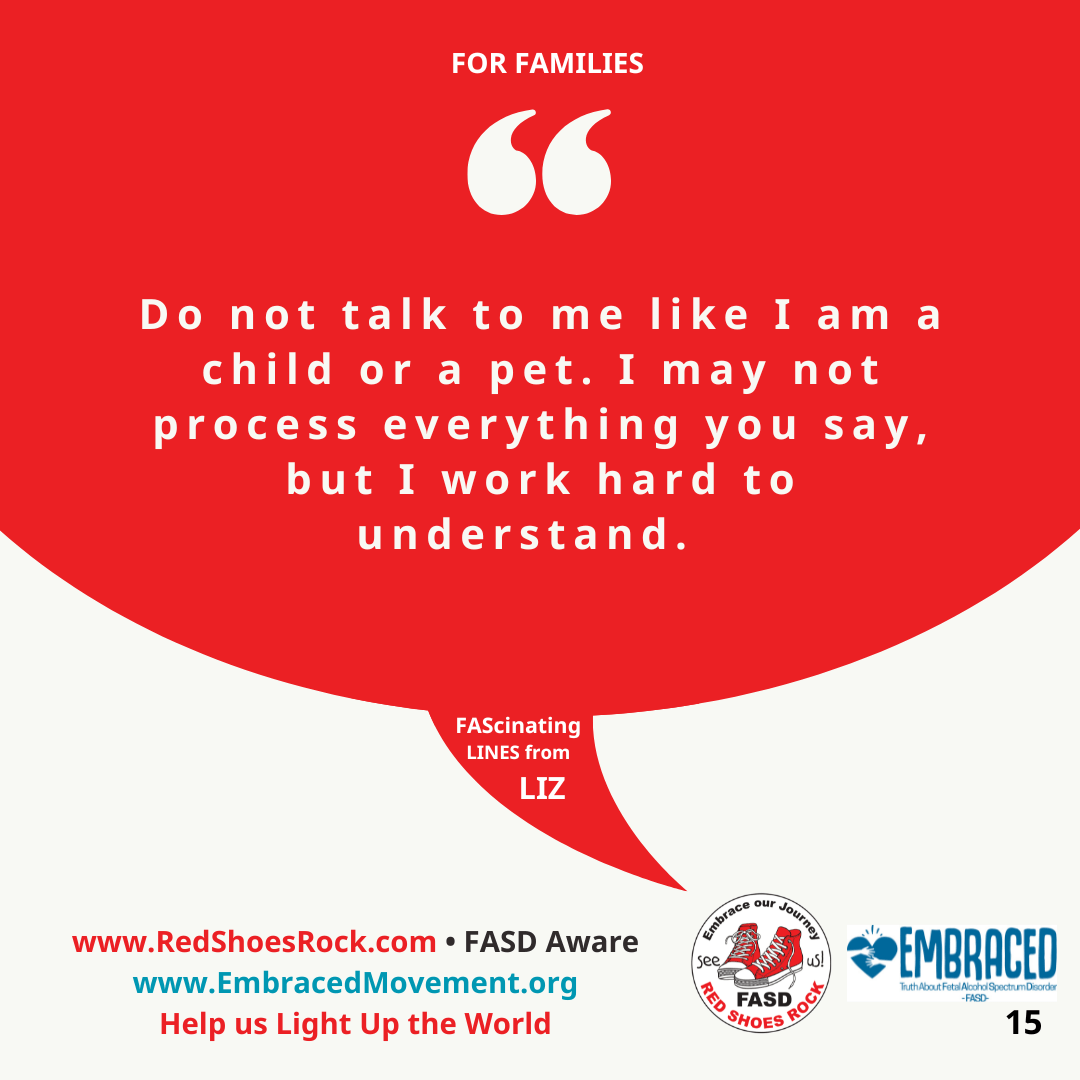
Respectful and clear communication is essential when interacting with individuals who are neurodiverse. Neurodiversity includes a range of neurological differences, such as Fetal Alcohol Spectrum Disorders (FASD), autism, ADHD, and more. It’s important to remember that while some individuals may process information differently, they deserve the same respect and consideration as anyone else. Here are some tips on how to communicate effectively and respectfully.
- Avoid Patronizing Language: Talking to someone like they are a child or a pet can be demeaning. Instead, use the same respectful tone and language you would use with any adult. For example, rather than saying, “Oh, honey, let me do that for you,” try, “Do you need any help with that?”
- Be Clear and Direct: Use straightforward language and get to the point without unnecessary complexity. For instance, instead of saying, “If it’s not too much trouble, could you possibly lend me a hand with this task when you have a moment?” simply say, “Can you help me with this task?”
- Use Simple Instructions: Breaking down instructions into clear, manageable steps can be very helpful. For example, instead of saying, “Can you organize the kitchen?” say, “Please put the dishes in the cupboard and wipe down the counters.”
- Give Time to Process: Everyone processes information at their own pace. After giving instructions or sharing information, allow some time for the person to process what you’ve said. For example, after explaining a task, pause and ask, “Do you have any questions about what I just said?”
- Offer Examples: Examples can help clarify your points. For instance, if you’re explaining how to use a new tool, show how it’s done or provide a visual aid. Saying, “Press this button to start the machine, like this,” while demonstrating can be very effective.
- Check for Understanding: Ensure the person has understood by asking them to repeat the information in their own words. For example, you can say, “Can you tell me what you’ll do next?” This confirms they’ve grasped the instructions and gives them a chance to ask questions if needed.
- Show Patience and Empathy: Being patient and empathetic goes a long way. Understand that neurodiverse individuals are often working hard to process and respond appropriately. Avoid showing frustration or impatience.
- Respect Their Abilities: Recognize and respect their abilities and efforts. Acknowledge their hard work and the strategies they use to navigate the world. Compliment their efforts and successes genuinely and specifically, like saying, “You did a great job organizing those files.”
- Avoid Assumptions: Don’t make assumptions about their abilities or needs. Ask open-ended questions to understand better how you can support them. For example, “What can I do to help you with this task?” opens the door for them to express their needs.
In conclusion, communicating with neurodiverse individuals requires clarity, respect, and empathy. By using simple, direct language and being mindful of their unique processing needs, we can foster an inclusive and supportive environment where everyone feels valued and understood. Remember, neurodiversity is a natural and valuable part of human variation, and with the right approach, we can all connect and communicate effectively.
TODAY’S NOTE: When I must work with highly educated people, I am often dismissed or spoken down to. After years dealing with chronic illnesses, I look at you and think — Really? – In Solidarity, Liz
 Red Shoes Rock